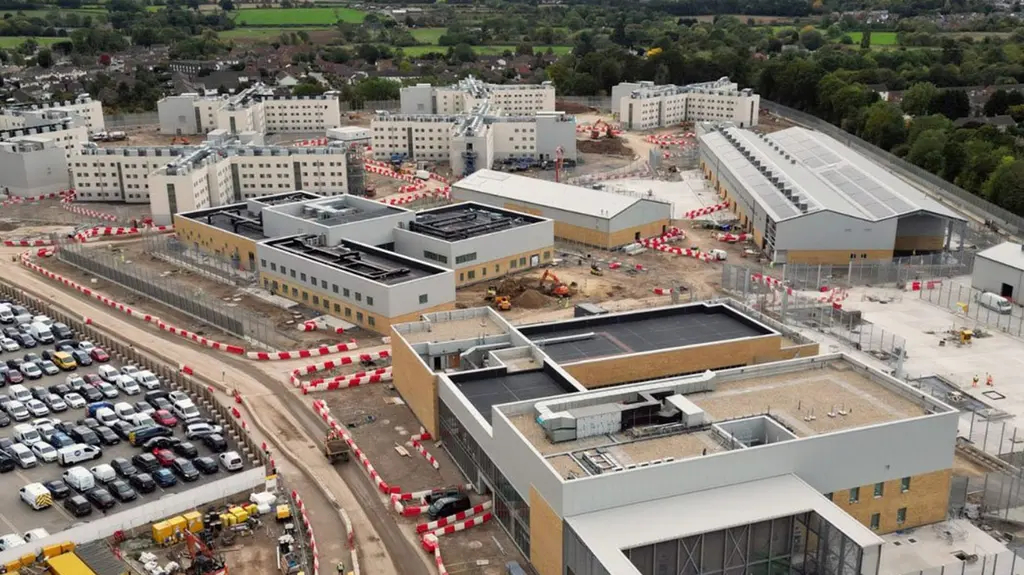
Port of Tilbury Cement Grinding Facility
Construction of a new cementitious products importation and distribution facility (annual capacity 730k tonnes) to help meet rising demand for low carbon construction solutions.
Client
Holcim UK
Location
Port of Tilbury, Essex
Principal Contractor
Careys

Summary
After removing/diverting existing utilities, demolishing foundations and obstructions, and installing the pile mat, main civils works consist of: materials handling/processing/storage infrastructure; sitewide surface water management; potable network design and installation; and road construction, external surfacing, and fencing.
Key facts include:
- Principal contractor under a NEC Option A contract.
- Key infrastructure, consisting of a GGBS import handling system; materials blending and storage; and silos and product dispatch.
- Civils design and build comprising: all structural foundations; piling strategy and layout; plot drainage (surface and foul); new potable network, utilities and external works, and highway works.
- Structures comprising: eco-hopper and quay conveyor system; storage hall with tripper conveyor system; silo array; vertical roller mill; workshop, stores and diesel tank; facilities offices; MCC units, compressed air units; VRM substation; and external tank bases.
- Total excavation 7000m3; 2,700 piles; 1270t rebar.
- 12,000m3 total concrete (storage hall foundations 5,700m3). Holcim stipulated concrete from their London Gateway site.
- Existing concrete subbase tested and crushed on site for 6F2 utilised for the piling mat. Sitewide examination and disposal of contaminated materials, including asbestos.
- Key risks and challenges, including surface water management and the mapped location of strikes from two WW2 bombs not designated ALARP at contract signature.
- 4,600m utility and drainage trenches. Disconnections of the existing network to enable the hard break-out sitewide.
- Sustainable procurement of aggregates for drainage and other uses, sourced from a partner’s washing facility close to the site.
- Significant stakeholder interfaces, including: existing storage and freight users operating heavy machinery; Holcim UK handover of the demolition phase; UXO investigation and works; road reinstatement; piling; and the dome subcontractor’s
NEC Option A
Port of Tilbury Cement Grinding Facility is operated under NEC Option A 2017 NEC 4 Option A with secondary options X2, X4, X7, X8, X11, X15, X16, X18, Y(UK)2, Y(UK3) and Z clauses.
Collaboration and Communication
We believe that to successfully deliver a NEC Option A contract all stakeholders must place strong emphasis on effective communication and collaboration. This partnership approach is embedded in the contract’s structure and processes to ensure trust, transparency, and proactive problem-solving which ultimately ensures the project is delivered on time and within budget.
At Port of Tilbury Cement Grinding Facility we achieved this collaborative approach through various meetings and workshops including but not limited to;
Internal Meetings:
- Weekly design management meetings between our third party designers, third party design managers, in house design manager, site project engineer and site project manager.
- Weekly commercial meetings between our commercial team and third party designers/design managers to discuss commercials.
- Weekly site team meetings to discuss programme, procurement and commercials.

Tilbury Concrete Pour
External Meetings:
- Weekly commercial meetings between our commercial team an.and quotations.
- Weekly design management meetings between our own design manager, project engineer, project manager, third-party design manager, third-party designers and the s team.
- Monthly early warning risk register review meetings as mentioned above.
- Friday afternoon meetings between our project manager and the Holcim UK’s project manager to “wash out” which aimed to mitigate and issues from the week and share lessons learnt.
To encourage communication outside meetings and workshops we operated an “open-door” policy with the Holcim UK, meaning we often would just go and sit with them to discuss any prompt issues and vice versa, rather than communicate over emails.
Risk
The primary risk management tool was the risk register, which was produced in detail at the very earliest stages of the project. Led by the project manager, the whole team assessed every facet of the project for risk and opportunity. These were then quantified where possible, assigned owners, and discussed in detail at the first risk reduction meeting to agree mitigating actions.
The register was scrutinised and updated internally on a weekly basis, with the assistance of a third-party design management company, as well as our own design manager and operational team, the Holcim UK reviewed the register during monthly meetings.
Early Warnings Notice and Compensation Events
Early warning notices and compensation events are critical to the success of NEC Option A contracts as the are designed to manage risk, provide transparency and prevent disputes to ensure the works are completed on time and budget.
To proactive solve issues before they arise our team raise early warning notices as soon as we become aware of an event that could: increase the total of the prices/delay completion/delay meeting a key date/impair the performance of the works/increase contractors cost. Prior to raising an early warning notice our commercial team contact the Holcim UK’s project manager to notify them of the potential and they will briefly discuss the notice . The risks identified in the early warning notice would be added to the risk register, which is reviewed and discussed with the Holcim UK on monthly basis. In between the meetings, Holcim UK and Careys commercial team kept open dialogue via CEMAR discussing best way to mitigate the risks within the early warning notices.
Compensation events were raised within 4 weeks that we became aware of an event, a contract amendment by the Holcim UK. Similarly to early warning notices, the commercial team would contact the Holcim UK’s project manager to discuss any potential compensation events with the Holcim UK’s project manager prior to submission. The commercial team then had weekly commercial meetings with the Holcim UK to agree the compensation event. Once the compensation event was agreed, the Holcim UK would request us for a quote for the compensation event, which would include cost and time impact. Once quoted, we would agree the quote within our minuted weekly commercial meetings.

Project Overview
Contract Event Management and Reporting, CEMAR
The Holcim UK specified the use of CEMAR to administer the contract due to its compliance with supporting the NEC suite of contracts. To manage the contract we used CEMAR for key tasks including;
- Submission of all early warning notices and compensation events with evidence ranking it with likelihood and severity. Each early warning notice / compensation event was replied to on an individual basis by the Holcim UK through CEMAR confirming the agreed actions and resolutions.
- Similarly design submissions, application for payment, technical queries contractor’s proposals, proposed instructions, forecasts to completion, tests and inspections all submitted and operated through CEMAR.
- Programme management, in line with the contract requirement we submitted monthly programmes on CEMAR, both Careys and the Holcim UK recorded commentary on the programme before it was signed off.
Services provided
Related projects
See more of our work like this
Related projects
See more of our work like this
Related projects